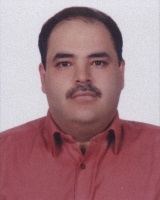








Biography
I am an Associate Professor of Structural Engineering at K. N. Toosi University of Technology, Tehran, Iran. My research is devoted to computational structural engineering, with particular emphasis on the development of numerical methodologies for analysing, understanding, and improving the behaviour and performance of complex structural systems. Rather than focusing on isolated engineering applications, my work seeks to develop computational approaches that are broadly applicable across diverse structural engineering problems.
My research integrates computational mechanics, adaptive finite element methods, structural optimization, nonlinear structural dynamics, fluid–structure interaction, earthquake engineering, artificial intelligence, and scientific computing within a unified computational framework. Alongside research, I am actively involved in graduate education, scientific software development, and the creation of computational tools that support both engineering research and teaching. This website presents a comprehensive overview of my academic activities, including research, publications, graduate supervision, educational resources, software, and professional achievements.
Education
My academic education has provided the foundation for an interdisciplinary research career that integrates structural engineering, computational mechanics, and scientific computing. Each stage of my education has contributed to the development of the computational perspective that now underpins my research and teaching activities.
The following academic qualifications summarize my formal education and reflect the progression from civil engineering fundamentals toward advanced studies in earthquake engineering and structural engineering.
| Degree | Years | Institution |
|---|
Academic Appointments
Since joining the Department of Structural Engineering at K. N. Toosi University of Technology, I have been engaged in teaching, graduate supervision, research, curriculum development, and academic service. These activities have provided opportunities to integrate research, education, and professional practice while contributing to the advancement of computational structural engineering.
Throughout my academic career, I have taught a wide range of undergraduate and graduate courses, supervised numerous MSc and PhD research projects, and collaborated with students and colleagues in developing computational methodologies for structural engineering. Teaching and supervision have always been regarded as natural extensions of research, enabling the transfer of scientific knowledge to the next generation of engineers and researchers.
| Years | Appointment |
|---|
Academic Journey
My academic journey began in 1991 when I was admitted to Sharif University of Technology to study Civil Engineering. During my undergraduate years, I developed a strong interest in numerical methods, scientific programming, and computational analysis. At a time when engineering software was far less accessible than today, developing computational tools became an effective way to understand both structural behaviour and the numerical algorithms governing engineering analysis.
Graduate studies further strengthened this computational perspective. Research conducted during my M.Sc. program in Earthquake Engineering introduced me to stochastic vibration, artificial earthquake simulation, structural control, and advanced structural dynamics. These topics established the theoretical foundation for many of the computational methodologies that became the focus of my later research.
During my doctoral studies in Structural Engineering, my research evolved toward adaptive finite element technology and computational mechanics. I participated in the development of one of the early three-dimensional adaptive finite element environments at Sharif University of Technology, contributing to adaptive mesh refinement strategies, recovery-based error estimation, solution-transfer techniques, and scientific software development within the SUT-DAM finite element platform.
After joining the Department of Structural Engineering at K. N. Toosi University of Technology, my research gradually expanded from computational mechanics toward structural optimization, nonlinear structural dynamics, vortex-induced vibrations, chaos theory, earthquake engineering, high-performance computing, and, more recently, machine learning and artificial intelligence. Although these research areas may appear diverse, they have all evolved from a common computational foundation and continue to support a unified research direction.
Today, my research continues to evolve toward intelligent computational structural engineering, where advanced numerical simulation, optimization, and data-driven methodologies are integrated to address increasingly complex engineering problems. Throughout this evolution, the primary goal has remained unchanged: developing reliable computational methodologies capable of bridging scientific innovation with practical structural engineering applications.
In a literal blink of an eye in terms of human history, computational science emerged, representing the single most important scientific advance in human history and it has transformed forever the way scientific discoveries are made and how engineering and medicine are done.
J. Tinsley Oden - Oden Institute, The University of Texas at Austin
The research activities presented throughout this website reflect this continuous academic journey. Although the individual research topics span several areas of structural engineering, they are unified by a common objective: advancing computational methodologies that contribute to more reliable, efficient, and intelligent solutions for engineering analysis, design, and performance assessment.