Bioinspired Microscale Platforms for Reproductive Biotechnology
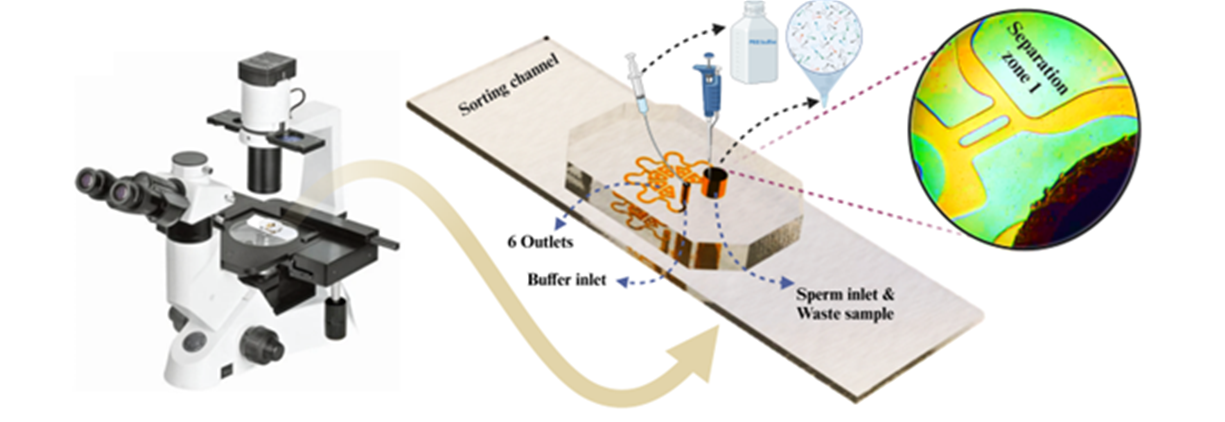
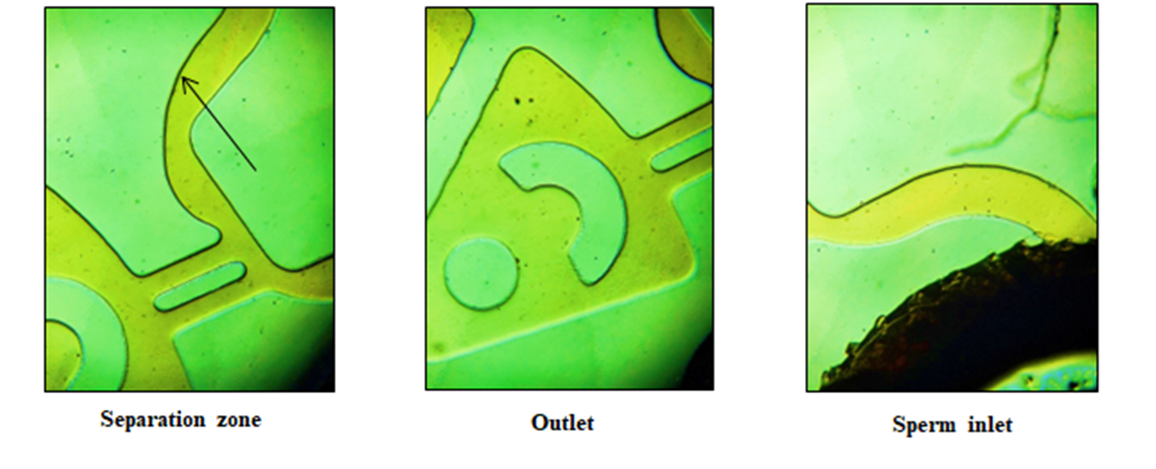
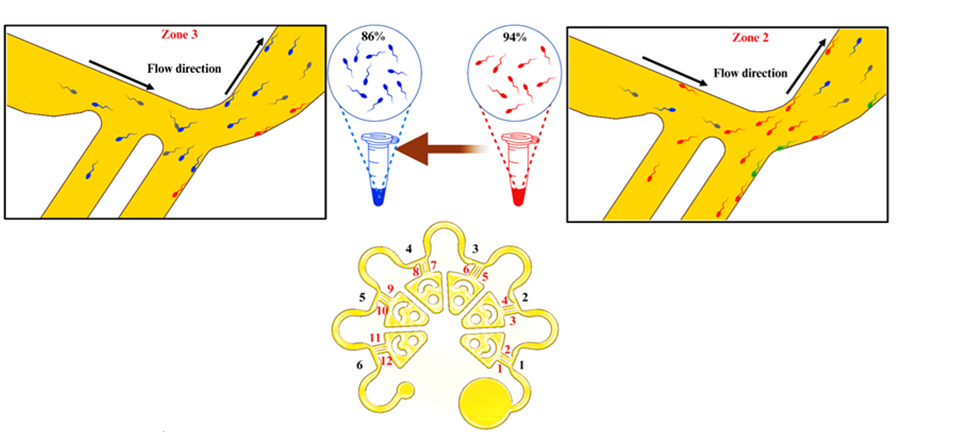
Our research focuses on the intersection of microscale engineering, biological physics, and reproductive medicine, specifically addressing the critical need for non-invasive, high-efficiency sperm sorting technologies. We have developed a bioinspired device featuring spiral microfilters that leverages intrinsic sperm behaviors such as rheotaxis and thigmotaxis to isolate high-quality sperm without the damaging mechanical stress associated with traditional clinical methods like density gradient centrifugation. Our findings demonstrate a significant improvement in DNA integrity and motility recovery, providing a robust, lab-on-a-chip solution to enhance In Vitro Fertilization (IVF) and clinical ART outcomes.

Description
Opportunities for Prospective Students:
This project sits at a unique crossroads of science and engineering, and we are actively seeking motivated students from diverse backgrounds to push these boundaries further:
- Mechanical & Biomedical Engineers: If you are interested in fluid dynamics simulation, microfabrication, and optimizing microscale architectures for cell handling, your expertise is essential to refining our next-generation prototypes.
- Computer Vision & AI Researchers: We are integrating automated analysis pipelines to track sperm motion and assess sample quality in real-time. If you enjoy deep learning, object tracking (e.g., YOLO/ByteTrack), and image analysis, this is the perfect opportunity to apply your skills to bio-imaging.
- Biologists & Biotechnologists: We require expertise in cell biology, sperm physiology, and clinical validation. If you are passionate about reproductive biology and want to bridge the gap between bench-top research and clinical application, you will be integral to our upcoming human-sample validation phase.
If you are eager to work at the cutting edge of microscale diagnostics and reproductive health, we invite you to join our team and contribute to impactful research that has the potential to transform clinical fertility care.
.References
- Ref 1
- Ref 2
- Ref 3